Tag Archives: garden with children

Kale is keeling over

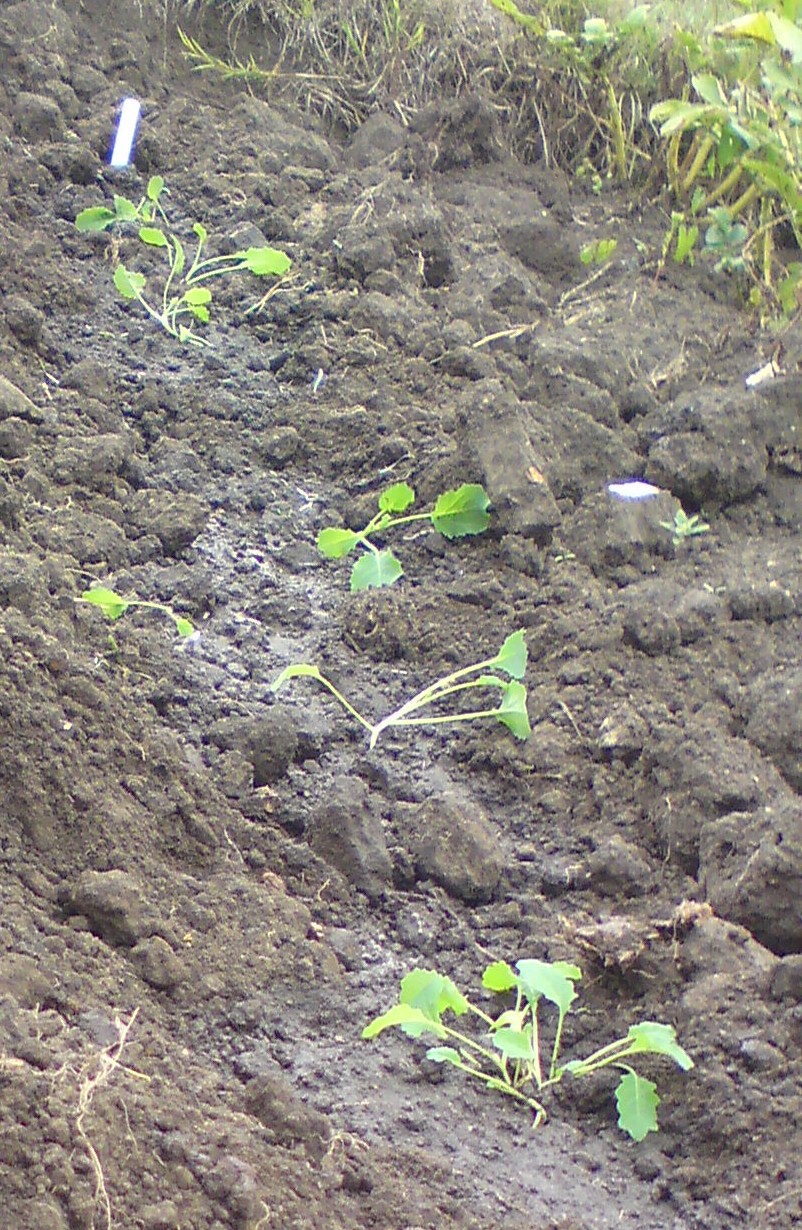
rather droopy kale

In between showers this week, the allotment has had the attention while the home garden dwindles into late summer.

There’s cropping to do every time we visit: beans, courgettes, marrow, carrots, potatoes, tomatoes, beetroot, spring onions and raspberries. Even the children don’t mind going when there’s things to eat.

But it seemed a good time, as the ground is getting cleared, to try and put at least a few brassicas in for winter leaves. Hail to the Kale.

The kids, very surprisingly, love a bit of curly kale. Despite its reputation as bitter animal fodder, when steamed for just a few minutes, or pan-fried with garlic and bacon, it’s just delicious. But I’ve not actually successfully grown any yet.

I’ve tried direct sowing various varieties of kale this year already, and only around three have survived, looking very peaky under single cloches to keep the pigeons off.

Back home, earlier this month, I sowed a tray of Italian Black Tuscan/Nero di Toscana kale, which comes up with strappy dark leaves which are delicious picked young.

Kale just keeps coming with new leaves despite cold weather, so is a good crop over winter. The Italian leaves are crinkled like a savoy but without any of the layers and crannies for bugs and slugs to hide in, so easier to prepare.

My seedlings have outgrown their spot in the cold frame, so some have been planted out at the allotment where the spuds have come out, watered-in well, and then covered with a net cloche. They look a little pathetic, but hopefully they will mature for winter without fuss. I’m going to try a few in the flower border gaps at home just to see if they grow. They are attractive enough on the packet, lets see how they shape up in the flesh. . .

Leave a comment

Filed under Gardening

Buffalo-burs go around the outside

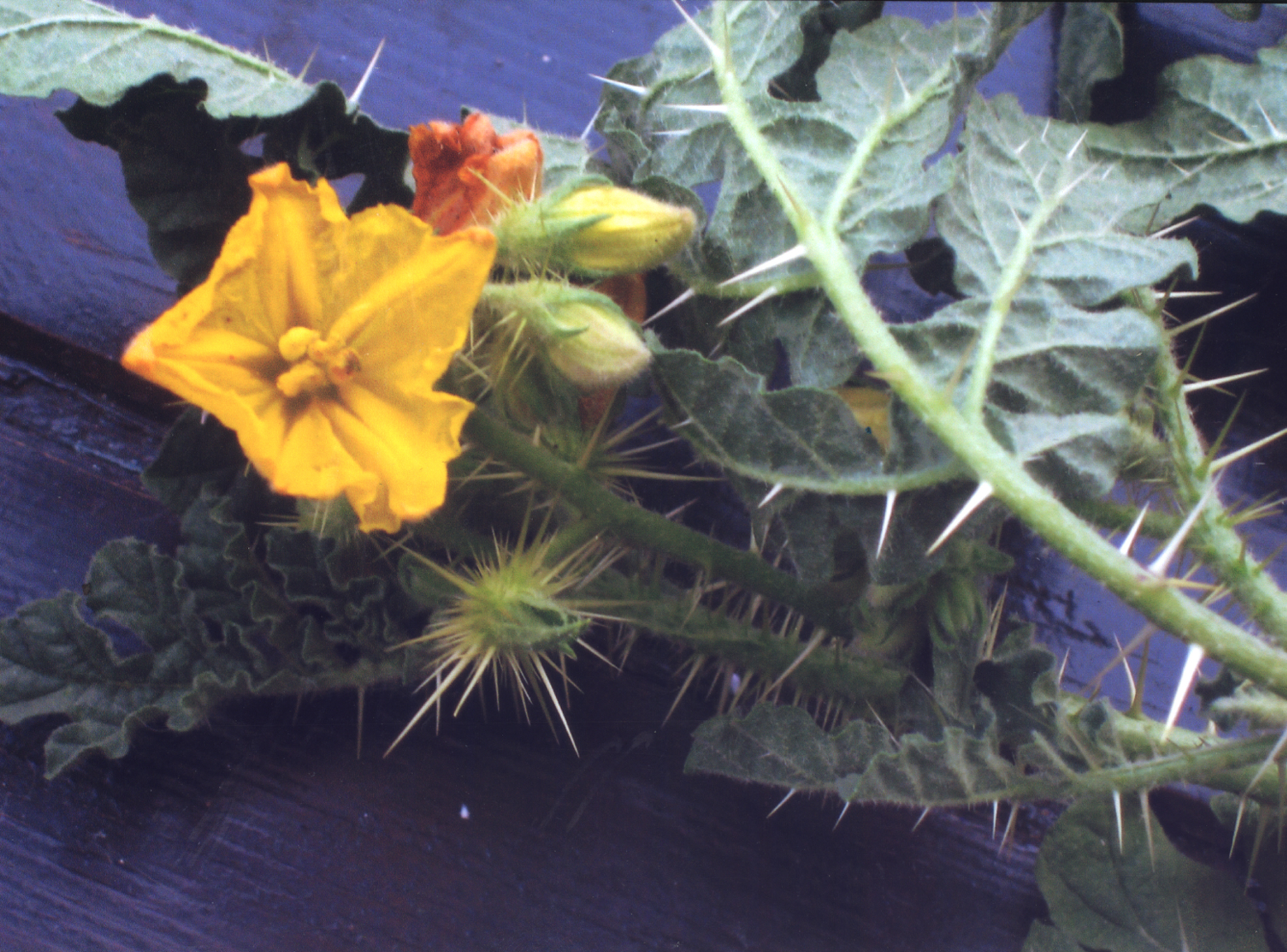
HERE you go then Mr Tapp. It looks like your mystery plant, photographed here last week, is an American invader, Buffalo-bur, or solanum rostratum.

It’s a member of the nightshade family, solanaceae, which includes potato, aubergine and nettle, but is very, potentially fatally poisonous. It’s not uncommon but gets brought in on animal fur and in birdseed and enjoys a very dry summer, which may explain its sudden arrival.

Many thanks to the readers who sent in suggestions, and to one who spent a long time searching Google images. I’ve learned a great deal about yellow-flowered, prickly plants this week! Feel free to email any other plant queries you may have.

solanum rostratum. Poisonous weed. Remove

Leave a comment

Filed under Gardening

Name that plant

Mystery plant?

I NEED your help solving a mystery. What on earth is this plant? I know it looks like a courgette flower, but it’s very small, about 14 inches and the leaves and stems are literally covered in quite vicious white thorns.

It was sent to me by a reader, Mr Tapp. I’m not the greatest of plant identifiers but had started to recognise more and more plants and flowers, if not the exact variety, then at least the family. But I’m stumped, and asking other gardeners for help!

I had better luck with another query: Lindsey’s tree. It’s a great big spreading thing at a house she’s only been in a couple of years and this year it has beautiful, huge white flowers all over it, which turn brown and fall off, leaving an unusual spiked ‘cone’.

magnolia grandiflora

It’s a magnolia grandiflora, and I only recognised it as I saw one at Cliveden gardens which covered an entire stately home wall! These magnolias flower in summer rather than spring, and the flowers come alongside the leaves, rather than before. They are evergreen too, which makes them ideal for a sunny wall where you can train them by trimming each year’s growth back to a healthy bud. plant. If yours has become a large tree, with the flowers out of sight above the canopy, then start to hard prune back a third of the tree this year and so on until it’s a manageable size. They can grow to 15 metres by ten wide if you don’t prune. You can see this year’s growth as it will still be green and slightly bendy. It may sulk for a season or two after hard pruning, but should recover.

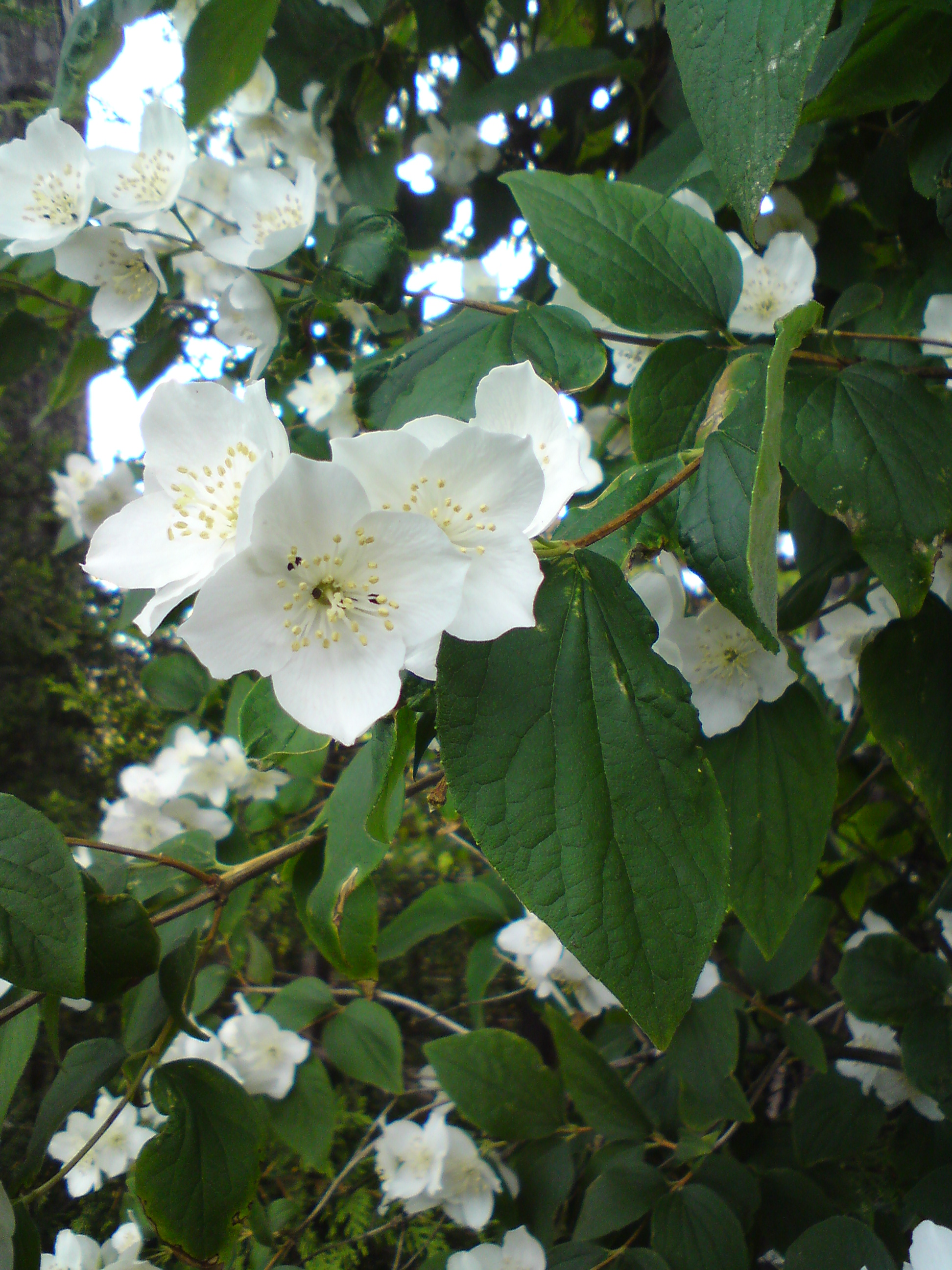
Philadelphus, or Mock Orange

The next picture is philadelphus, or mock orange, emailed by “Mrs Toodles.” She said: “It looks quite dull most of the year at the back of our garden but this July it was totally covered with lots of white flowers with a strong scent.” Philadephus also need hard pruning too and flowered particularly well this year after the snowy winter.

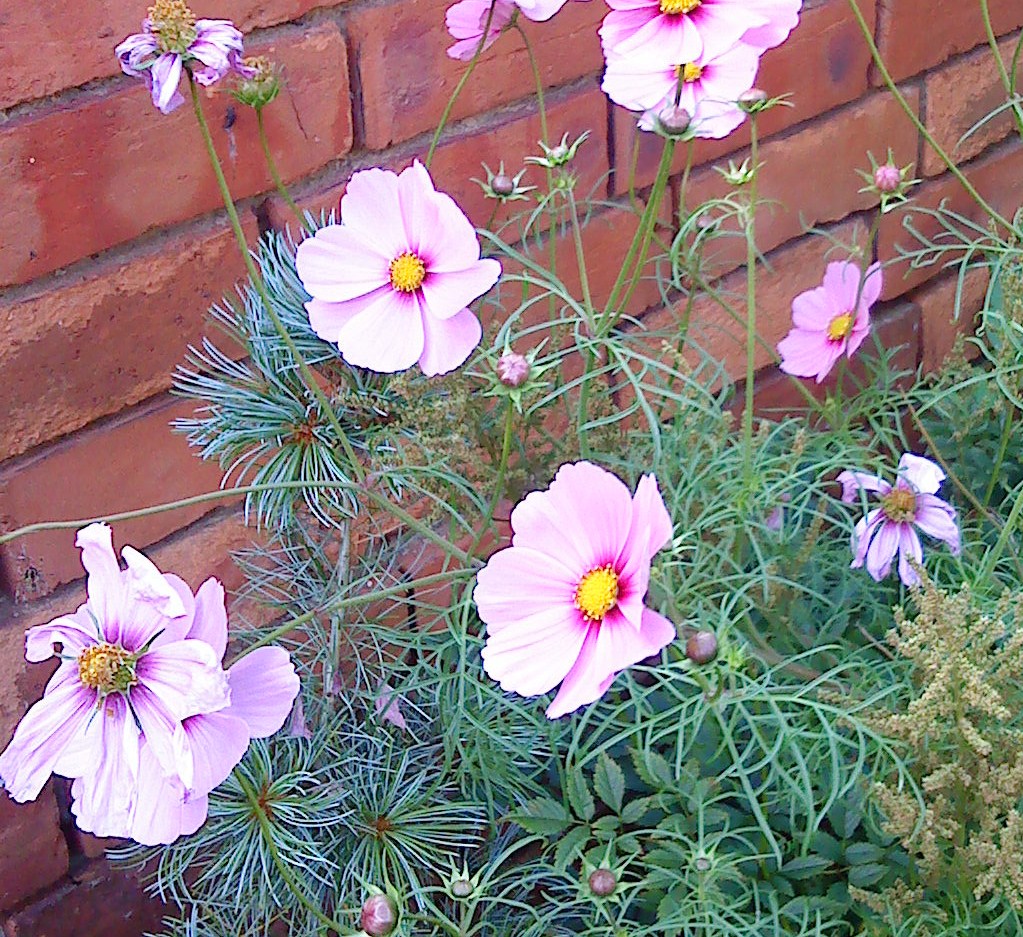
cosmos

 This “big daisy flowers with fluffy foliage” sent by Jane and James is annual cosmos. Usually sown indoors in spring and transplanted into place in May/June. There are perennial types, like the delicious chocolate cosmos.

One of the most frustrating things for the beginner gardener is not knowing what you’re actually growing. You may have inherited plants when you move house, or have lost labels or seed packets. The best thing is to get a good book, like Hessayon’s New Flower Expert, and just go through the garden comparing pictures with the real thing. Online gardening forums are great too, if you can take a snap and upload it.

It’s not been a great year for the new gardener, thanks to the drought, so don’t beat yourself up if things haven’t gone as well as you’d hoped, even the most experienced gardeners have had some disappointments this summer. It’s not you, it’s the weather!

2 Comments

Filed under Gardening

‘Tis the season for sneaking courgettes into every meal

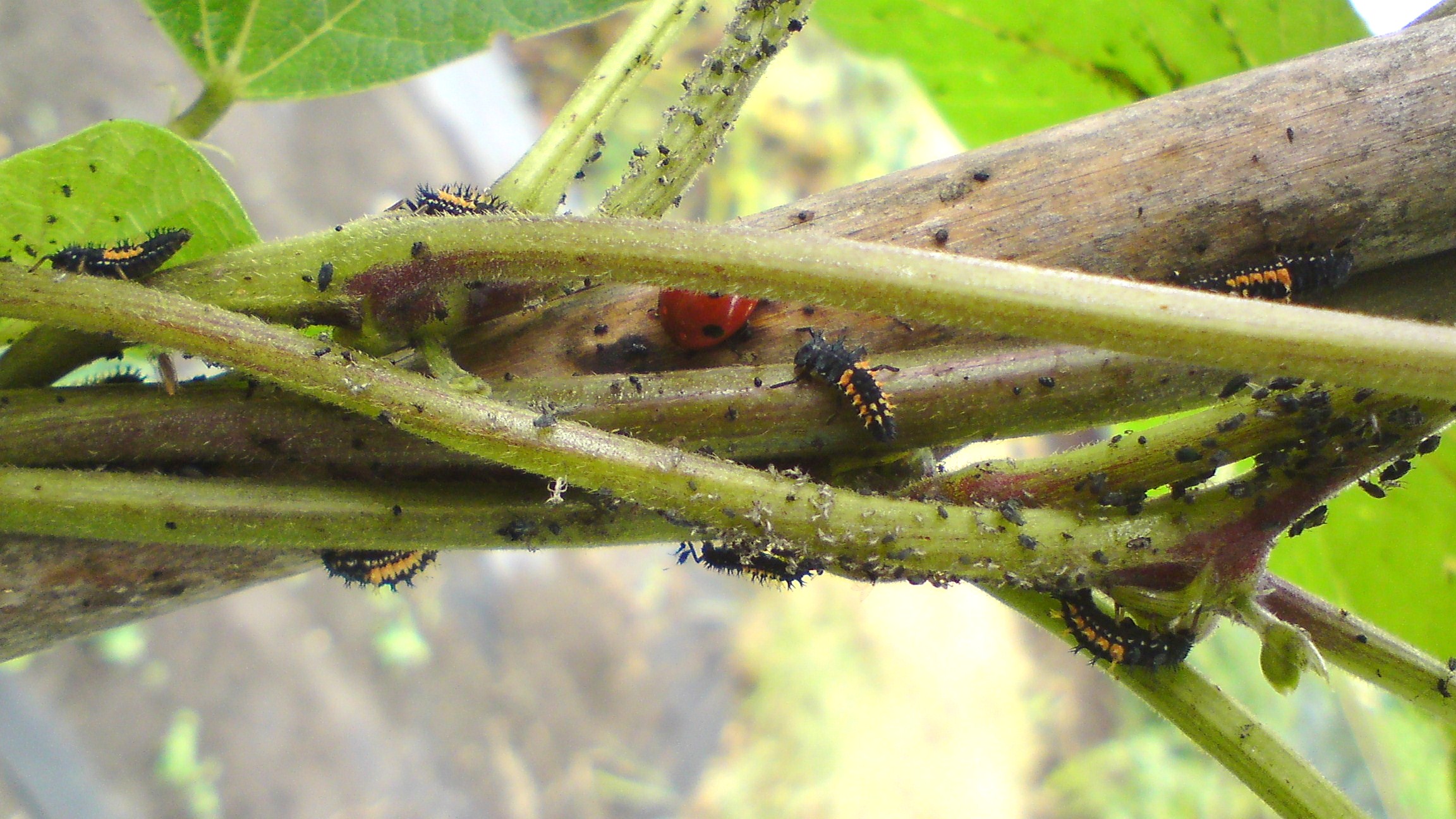
ladybird larvae eat blackfly

RETURNING from a week away showed just how little my garden and allotment need me: they hardly looked any different.

Yes, lots of the marigolds needed deadheading and the courgettes had turned into marrows, but generally, all had carried on perfectly well without my interference. Marrows are a vegetable I have learned to love since I started gardening. Slice lengthways, scoop out seeds, fill with browned mince and rice, sprinkle with cheese, bake in the oven. Delicious.

I’d like to claim it was planned. But in reality I had resigned myself to dead veg and droopy dahlias. The rain may have helped but on visiting the allotment this week I found out how little impact the heavy showers have had. The ground is bone dry and solid beneath the top half inch of damp dust.

Nonetheless, I needed to dig.

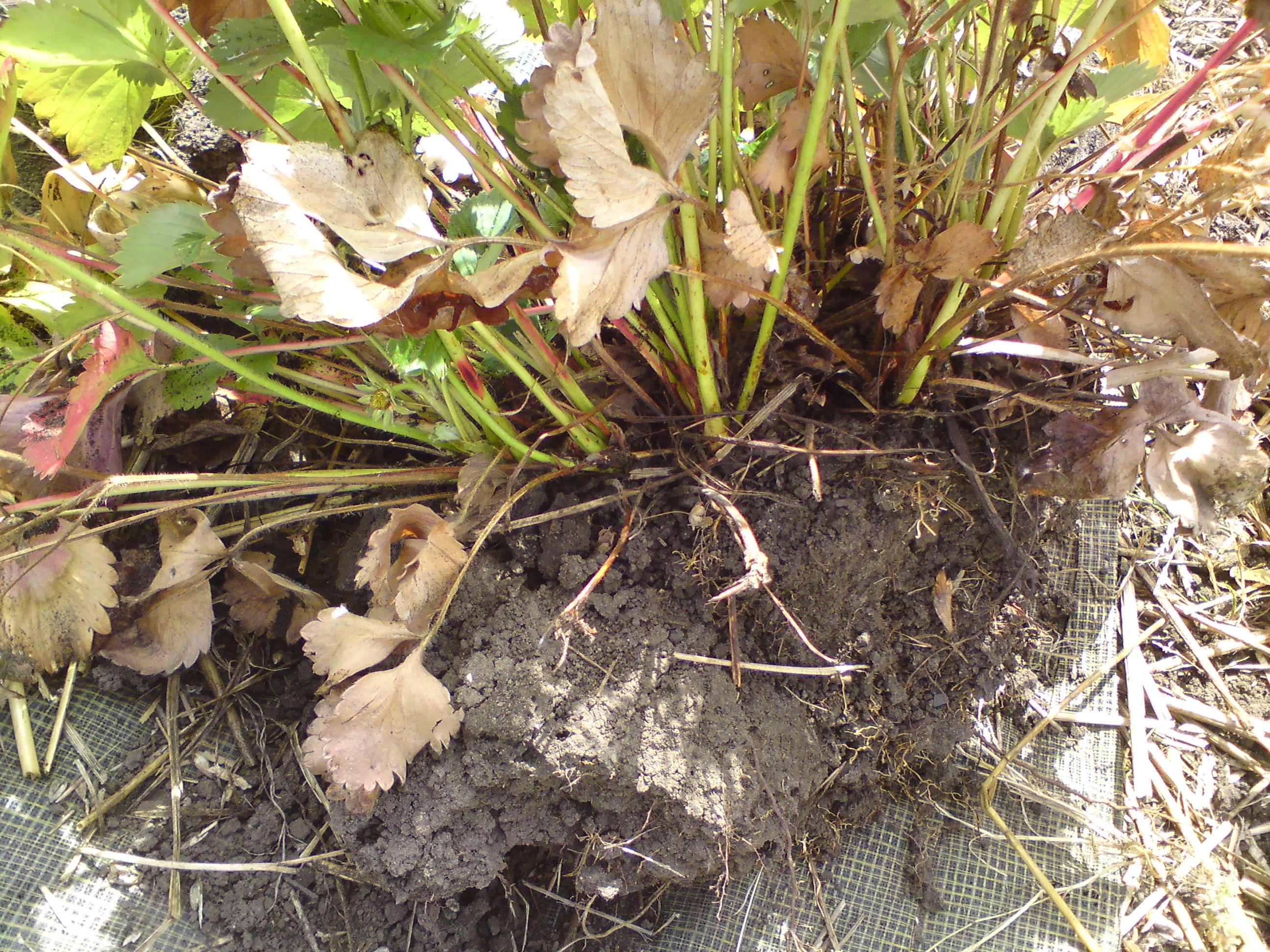
I’m trying something out with my strawberries, which have been in a couple of years and have become very clumpy this summer. Usually you can root the runners from established strawberry plants, which are like little clusters of leaves on a long stem which you can push into the soil and then sever from the parent once rooted to get a brand new plant.

My fruit beds have become very overcrowded and messy, so I thought I’d try splitting the big clumps instead. They lent themselves to the reduction well, as there were many plantlets that could be easily separated by gentle pulling, keeping a good amount of root and soil on each. From eight plants I now have 28!

Strawberry plants don’t last forever, and it may be that these have exhausted themselves, but by replanting and watering in well now, it should allow them to establish before winter and hopefully we’ll have better yields of berries next June.

The crops are coming well, and this week we’ve been eating potatoes, shallots, garlic, onions, carrots, beetroot, runner and French beans, courgettes, cucumbers, spring onions, tomatoes, raspberries and blackcurrants, all home-grown.

I made some fairy cakes and mixed in some of the blackcurrant jam that we made and the cakes looked normal on the outside but were purple in the middle.

The beans are still managing to crop despite my blackfly infestation. I don’t spray, and the wildlife is now helping out instead.

The ladybird larvae are more numerous than I’ve ever seen, as you can see in the photo taken on my mobile phone. There are around eight and an adult on one small section. They eat huge amounts of aphids, and are your greatest garden ally. It’s hard to believe those bizarre-looking bugs turn into our beloved round ladybirds.

ladybird larvae (copyright H Scott)

PS: I’m on a mission this week as, by coincidence, several people have asked me to identify mystery plants in their gardens. I’ll update next week, so in the meantime, if you have any photos you want to email to me of plants you aren’t sure about, I’ll happily add them to the list.

courgette glut

2 Comments

Filed under Gardening

Would your absence be noticed?

I’D love to show you a photo of the first ever tomato to make it to full redness at the allotment, but Baby Bonnie picked it and took a bite before I got to her.

Rather disconcertingly, she then spat it out and handed it to me. And she LOVES tomatoes.

A little worried, I tried it, and couldn’t find anything wrong. Perhaps it tasted too much of tomato. There are loads more just changing colour on my solitary bush tomato, and it just proves that despite previously killing toms at the allotment, they can actually grow there, with even having to be netted.

Apart from the tomatoes, It was lovely to visit the allotment last week, because on my previous visit I was concerned the season was over for me, bar the shouting.

Suddenly everything is ready to eat, despite what certainly feels like the driest summer in years.

A gap of three days since my last potter and the courgettes have turned from tiny half-finger-long veg-lets into marrows. Lots of them.

The kids were digging carrots that were the longest we’ve ever managed in our solid clay soil. Yet more beetroot, spring onions, potatoes, raspberries, far too many beans (they still came through) and onions. The sweetcorn is coming along nicely, and I have a pumpkin plant starting to fruit. At home, there are more tomatoes and the first of a promising-looking mini-cucumber crop.

Now the problem is keeping it going when we go away on our holidays. My attendance is somewhat random at the best of times. How will the plot, and home garden, survive?

In recent years it hasn’t been a problem: it rains.

Usually the problem is coming home to find the weeds have taken over. This year, we desperately NEED rain. And this is coming from someone who is going camping!

What I’d really like is for it to rain heavily every night, just over Northampton, while we’re away. But more realistically, I’ll water and water as much as possible and cover the planting holes of the courgettes and tomatoes with muck and straw to try and hold in moisture while we’re away. Alternatively, you may be able to persuade a friend or relative to water every other day, or fit a drip irrigation scheme with a timer on the tap. I’m too disorganised to have done either.

It was also a pleasure to visit the allotment with all the kids. Our eldest doesn’t have to come after school by virtue of being on the other side of town. It was nice to see how chuffed he was to find the seeds he’d sown in a raised bed back in May had turned into carrots, beetroot, spring onions, coriander and dwarf sunflowers.

He’s also a good forager (scrumping is banned). He came back with blackberries, plums and gooseberries, all growing along the hedgerows (I made him show me).

Foraging is a neglected art. There’s plenty of fruit growing along hedges, footpaths and on derelict land, as long as you’re sure you aren’t trespassing and you know what you’re picking!

Leave a comment

Filed under Gardening

Stabbing and jabbing

IT was after I managed to stab my shin with a broken bamboo cane for the third time in a week when I decided it was time for a tetanus jab.

Slicing though my left index finger with secateurs didn’t help. The bruising hurt more than the wound, but the soil that disappeared under my skin was more worrying.

I bet many of you gardeners haven’t had a tetanus jab since school. I had one 11 years ago, after having Dougie, according to my doctor’s notes, and they are supposed to last ten years. If you haven’t had one that you can remember, it may be worth a visit to the nurse for a booster.

Tetanus is one of those conditions that you think has been eradicated. It hasn’t.

The tetanus bacteria usually enter the body through a cut in the skin. Once inside, the bacteria multiply and release a neurotoxin (poison) called tetanospasmin, which causes the symptoms of tetanus to develop.

Tetanospasmin can spread through the bloodstream, blocking the nerve signals from the spinal cord to the muscles. This causes muscle spasms and rigidity throughout the body, particularly in the neck, face, and jaw (known as lockjaw).

For a tetanus infection, the incubation period (the time between getting the infection and the onset of symptoms) is between 4-21 days. The average incubation time is 10 days.

A tetanus infection must be treated quickly because, left untreated, the condition can be fatal. Tetanus cannot be passed from person to person.

The bacterium is mostly common in soil and manure, which makes it a pretty scary thing for the gardener. But there are less than 10 reported cases a year, thanks to the immunisation of babies for several decades. Those most at risk are over 65, who didn’t get the jab as babies. I was given a combined jab, upper arm, which includes a diptheria and polio booster. Slight swelling a couple of days later, nothing more.

Now I can stab myself with sticks to my hearts content.

Leave a comment

Filed under Gardening

She looked down the slippery slope towards winter

LAST week before school holidays = last chance for un-interuppted gardening. So I spent hours last Tuesday blitzing the allotment.

Up came all my onions, which had keeled over and are drying quite nicely, and most of the shallots. The dried-up pea plants were cut off and the roots dug into the soil.

Weeded quite a lot, especially the tall dandelion-like sowthistle and groundsel, which have taken over my allotment and given a home to many, many yellow and black striped caterpillars of the cinnabar moth.

I’ve rather speculatively put in a row of very chitted seed potatoes with were forgotten on a windowsill, in the hope we have an autumn that’s warm enough to keep them alive for a late crop. I’m having another bash at sowing some kale, under cover, as my previous seedlings got shredded by the flea beetles when sown direct.

Still surviving and starting to fruit beautifully are the ever-reliable courgettes, some bush tomatoes, sweetcorn and beans. The roots, including carrots, beetroot and parsnips are looking good despite the lack of rain and the spuds are blight-free – so far.

My salad leaves bolted in the heat but overall, 2010 has been pretty fruitful considering the warm weather. I’m already planning for next year. . .

cinnebar moth catapillars

Leave a comment

Filed under Gardening

Eat my pretties! Eat!

blackfly on runner beans. Grr!

FINALLY, some rain. Stop moaning, it had to happen, since I spent a morning in the drizzle at the allotment lugging watering cans about. It was virtually a rain-dance.

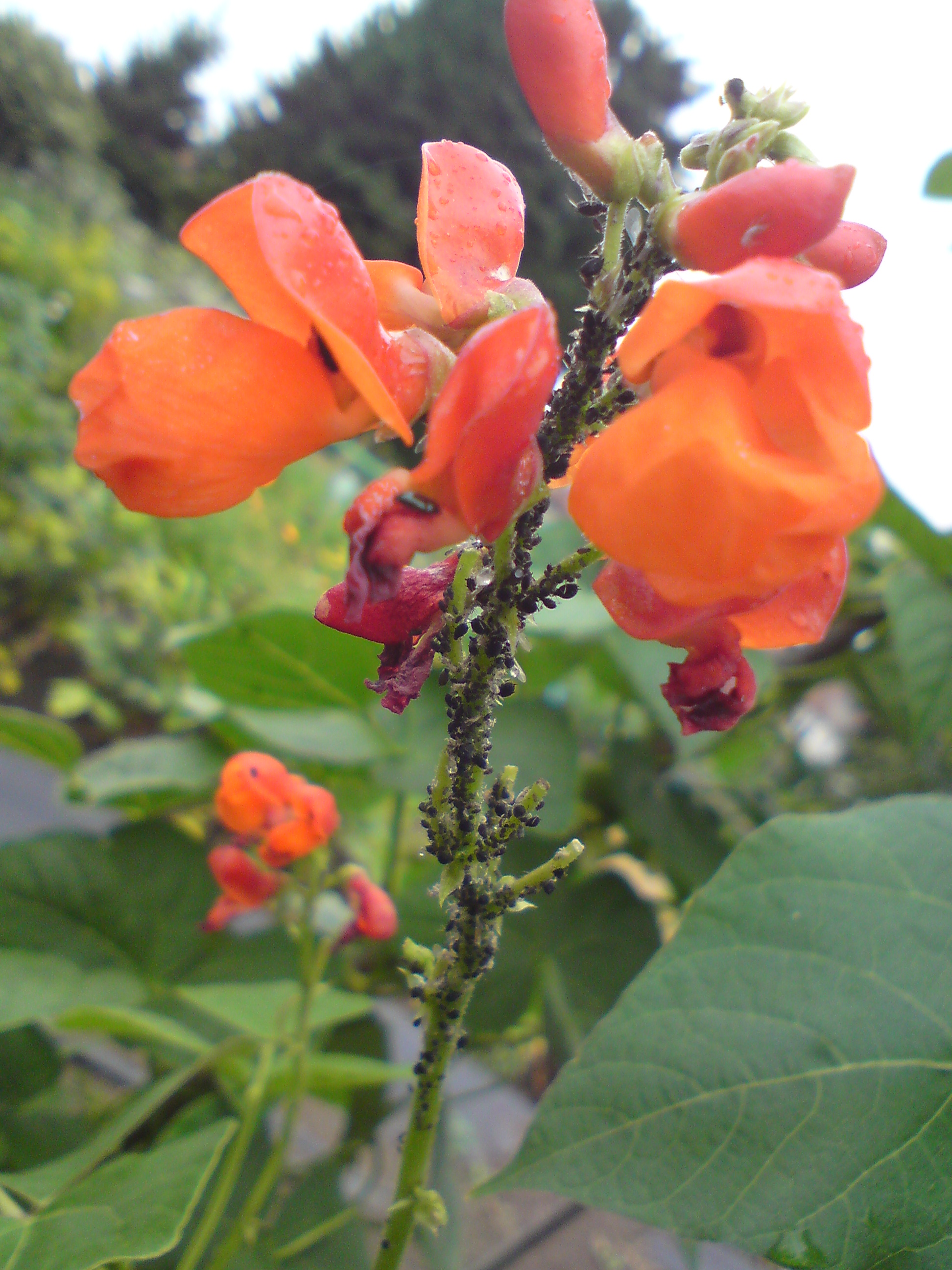
The plot looks rather sorry for itself. After a disappointing start with many plant simply dying off, I have managed to get a few runner bean plants into flower but they are covered in blackfly.

If this is your first year growing runner beans, don’t despair and write yourself off. It’s not you.

Runners are usually one of the easiest crops and they look lovely in the flower border too, climbing clematis and other plants whose flowers may have finished. They (usually) produce lots of beans with virtually no effort from you, other than a nice trench of muck or kitchen waste when you plant them out and plenty of water in dry weather.

I’ve never had problems with beans before. I’m hoping it’s just been the dry weather. I don’t use insecticides and there are too many to rub off with finger tips. However, just as I was going to write off this year’s crop, I spotted a ladybird, then another. Closer inspection showed there were 14 ladybirds on one wigwam alone. Hurrah!

Ladybirds love aphids of any kind. They scoff them and lay their larvae on them who scoff even more. I’m leaving it all in their capable jaws.

If you spot a funny-looking bug on your plants that is black with front arms and yellow stripes on its sides, which looks absolutely nothing like a ladybird, DON’T kill it. This is what a baby ladybird looks like, and it will be your ally in the fight against aphids of all colours.

Leave a comment

Filed under Gardening

They compared purple tongues at dinner

CROPPING at the allotment this week:

Purple pleasures

Red onions. Huge this year, and satisfyingly shiny when you dry them for a couple of days and peel away those crispy outer layers.

Raspberries. Not as good as previous wet years, but delicious.

Early carrots. Forked and mis-shapen. But much nicer than the generic straight watery ones in the shops.

Spuds. Looking better the longer I leave them in the ground. Keep and eye out for blight now, and remove the leaves above ground if spotted.

Beetroot. Ah, how I love beetroot. Pulled when snooker-ball sized, boiled in their skin which when removed reveals that bleeding, staining, vibrant vegetable which tastes divine with a sprinkle of salt.

Leave a comment

Filed under Gardening

Why keeping a lawn ‘for the kids’ is a lie

THE lawn looks an absolute mess, mostly due to the lack of rain. I haven’t had to mow for weeks, as there are so many bare patches, and the soil is so hard and compacted, it hardly grows.

The kids don’t help. They insist on daily games of “honestly Mum it’s not football” and have worn huge bald patches into a not-very-big-in-the-first-place lawn. The paddling pool has added circular yellow patterns to the mix.

I refuse to get stressed about it. The damn couch grass at the allotment is so persistent it would survive a nuclear bomb. The more civilised lawn at home just needs a few regular nights of rain and some patching with a rake, compost and some seed. It will be rampant by autumn, you’ll see. . .

1 Comment

Filed under Gardening