Can you have too many foxgloves?

I love a foxglove. But I’ve never bought one. There are currently about 40 in flower in my urban patch and I’ve given away about 20 more. They’ve just self seeded EVERYWHERE.

At first I though I’d dig them up in early spring, and they would just fill a few gaps, but with the hot weather they’ve taken over a little, and I’m already planning what to do to stop them taking over next year.
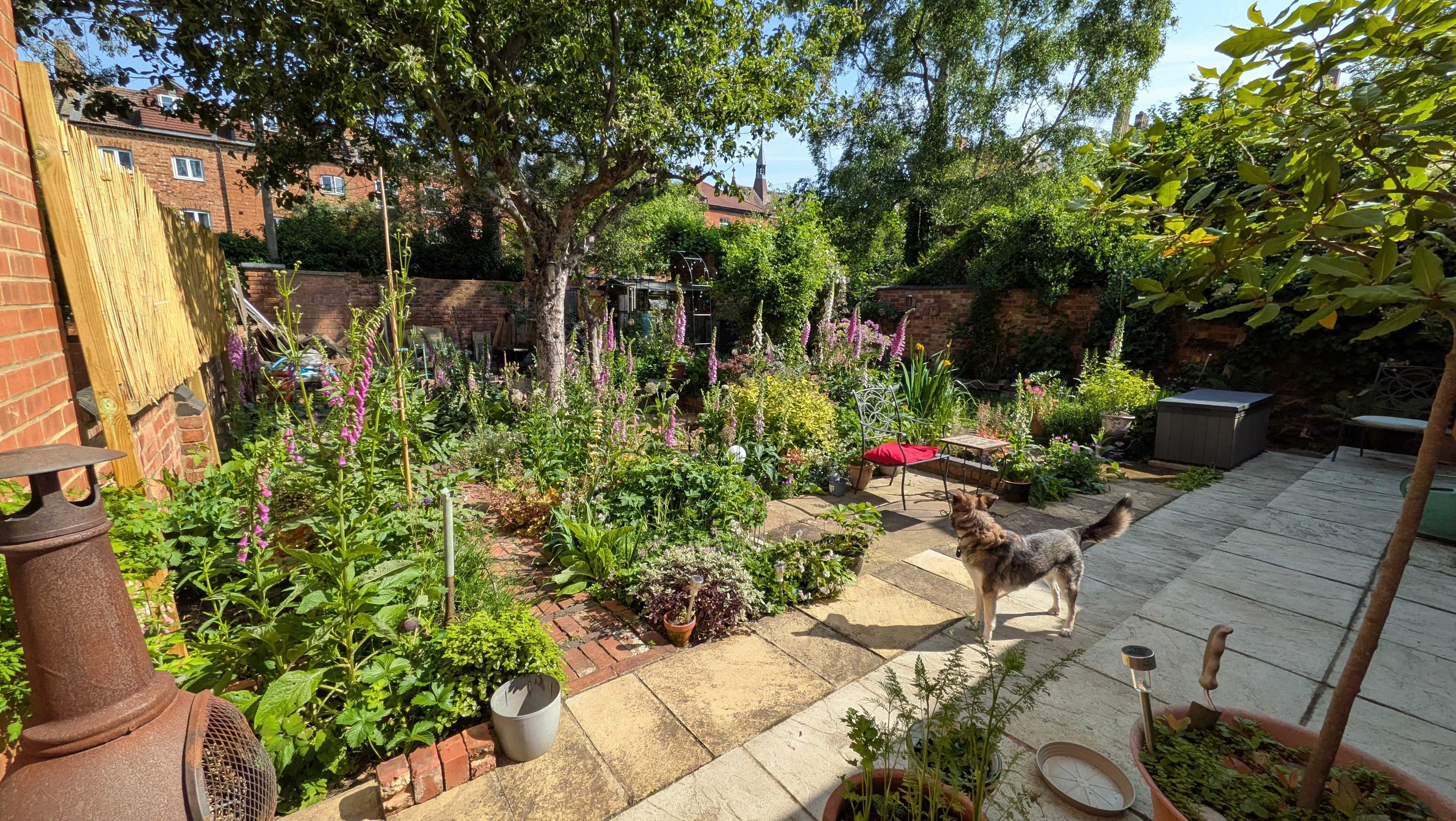
This is the second year of my ‘new’ garden, which I’ve developed from the previously overgrown ‘wilderness garden’ of my old neighbouring plot. And despite really trying to space them out, they’ve gone a bit nuts.

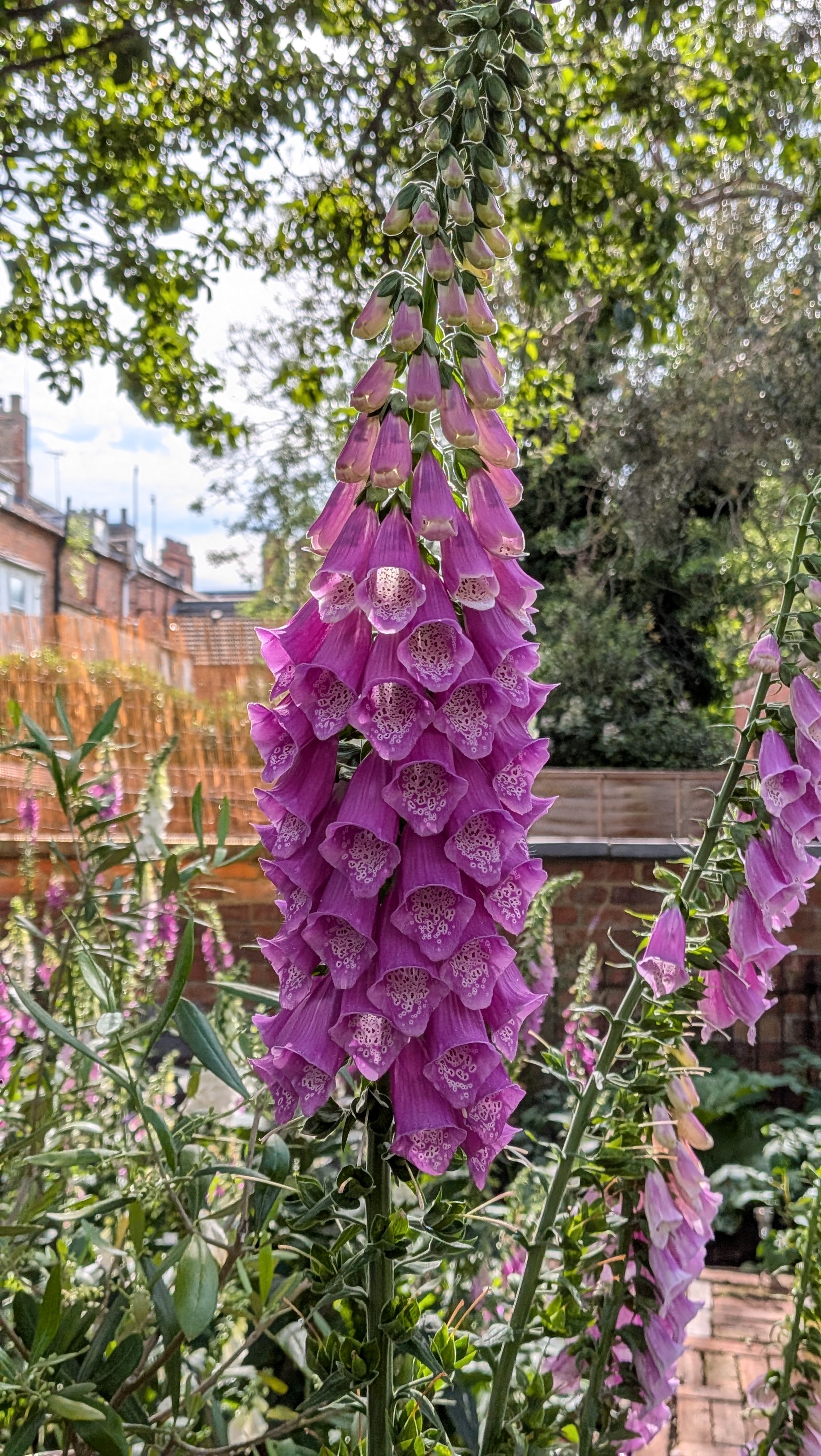
Foxgloves, or Digitalis to give them their Latin name, self seed everywhere. But they’re also biennial, which means the first year they pop up you just get leaves, and the second you get these magnificent spikes of flowers.
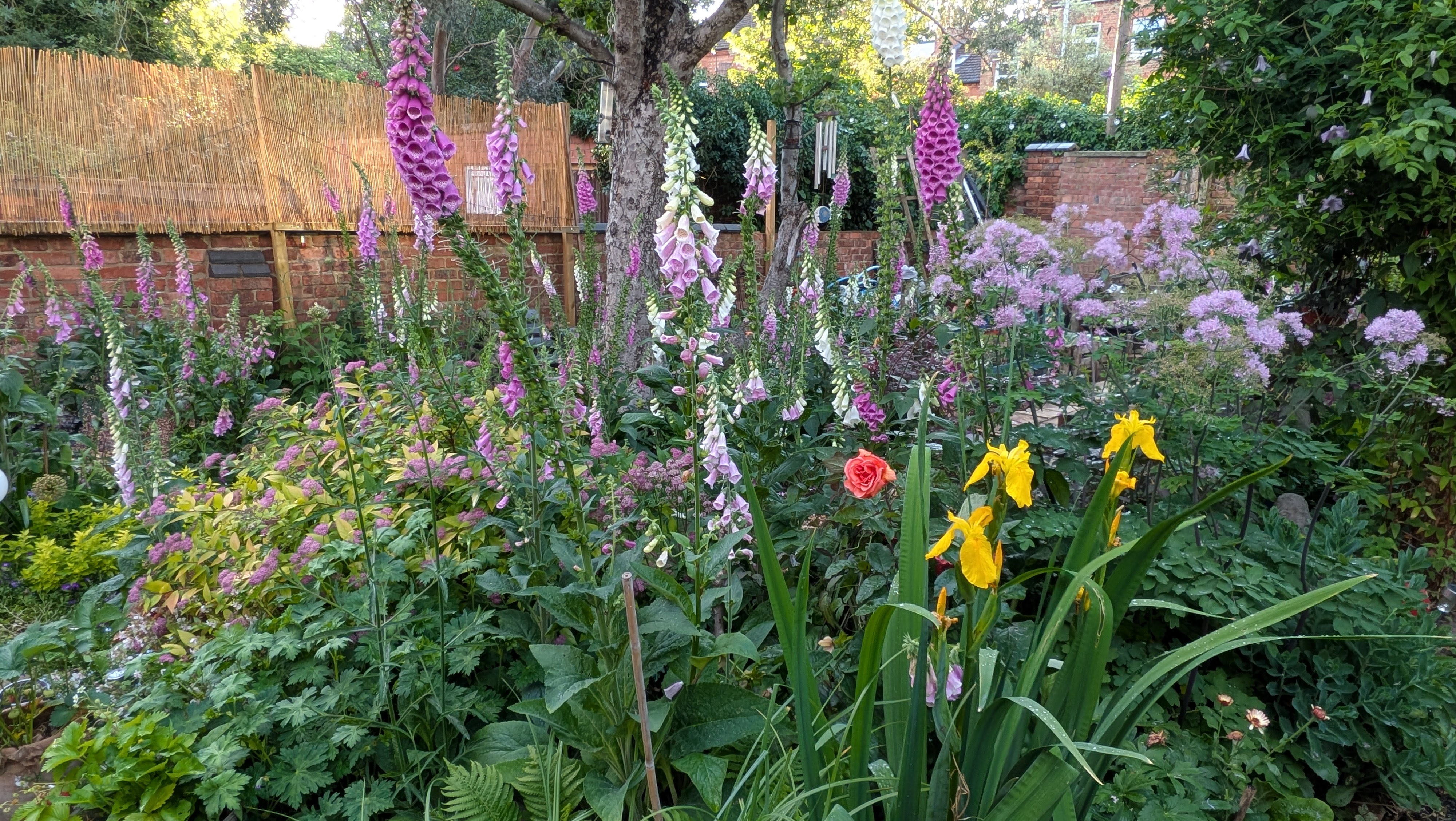
The most common is the purple one, Digitalis Purpurea (purpurea = purple, alba = white, red = rubra, viridis = green, nigra = black), gardening names like both colours and animals (foxglove, dogrose, harebell, cowslip etc).

Mine are mostly either purple or white, although there are some that look like they’ll be white but develop to pink, presumably hybridised.
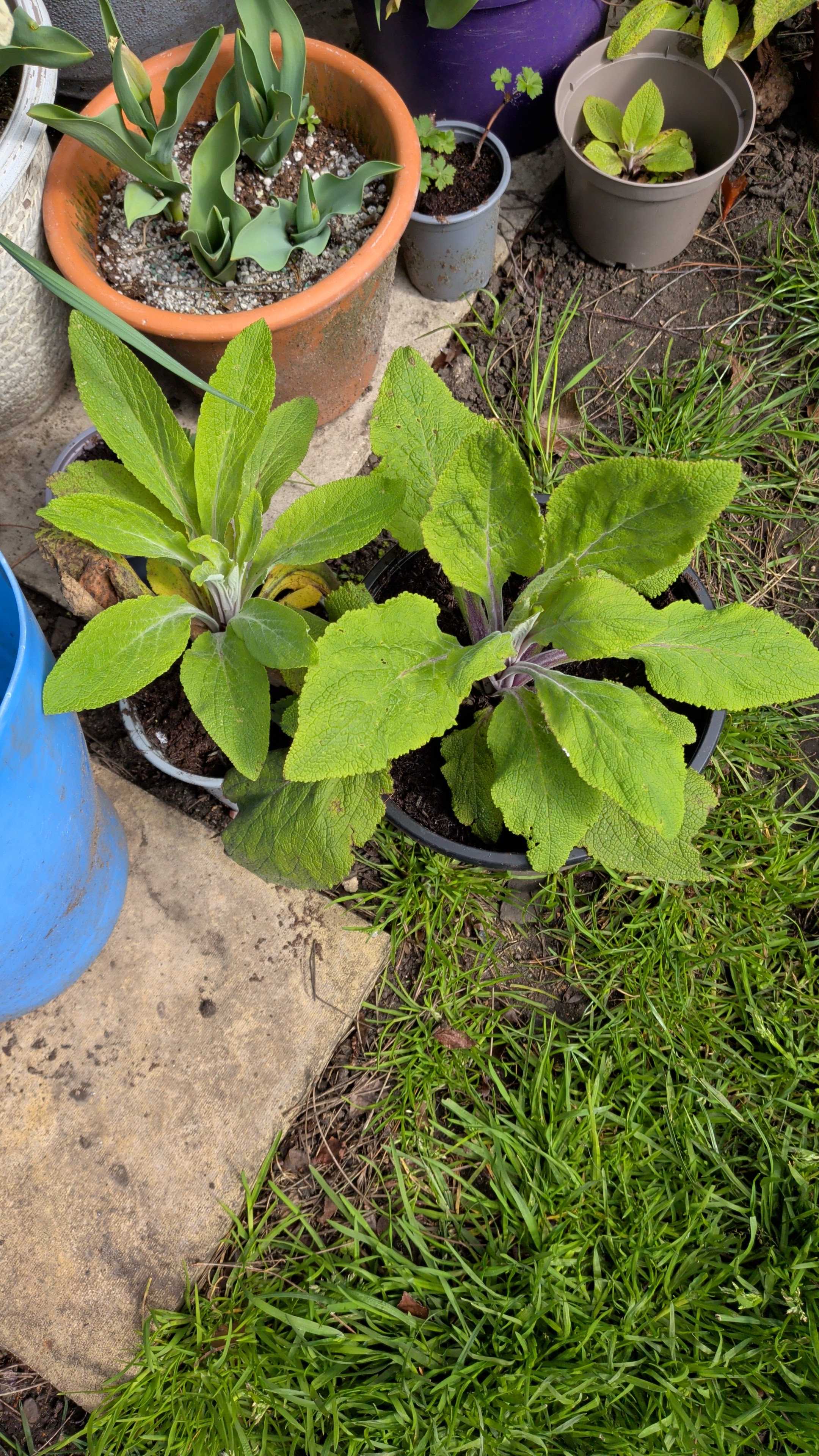
Over the winter I was digging up the seedlings from just about everywhere, cracks in paving, beds, raised veg beds, pots they weren’t meant to be in, and shoved them quite roughly into whatever pot they fitted in, sometimes in twos and threes.

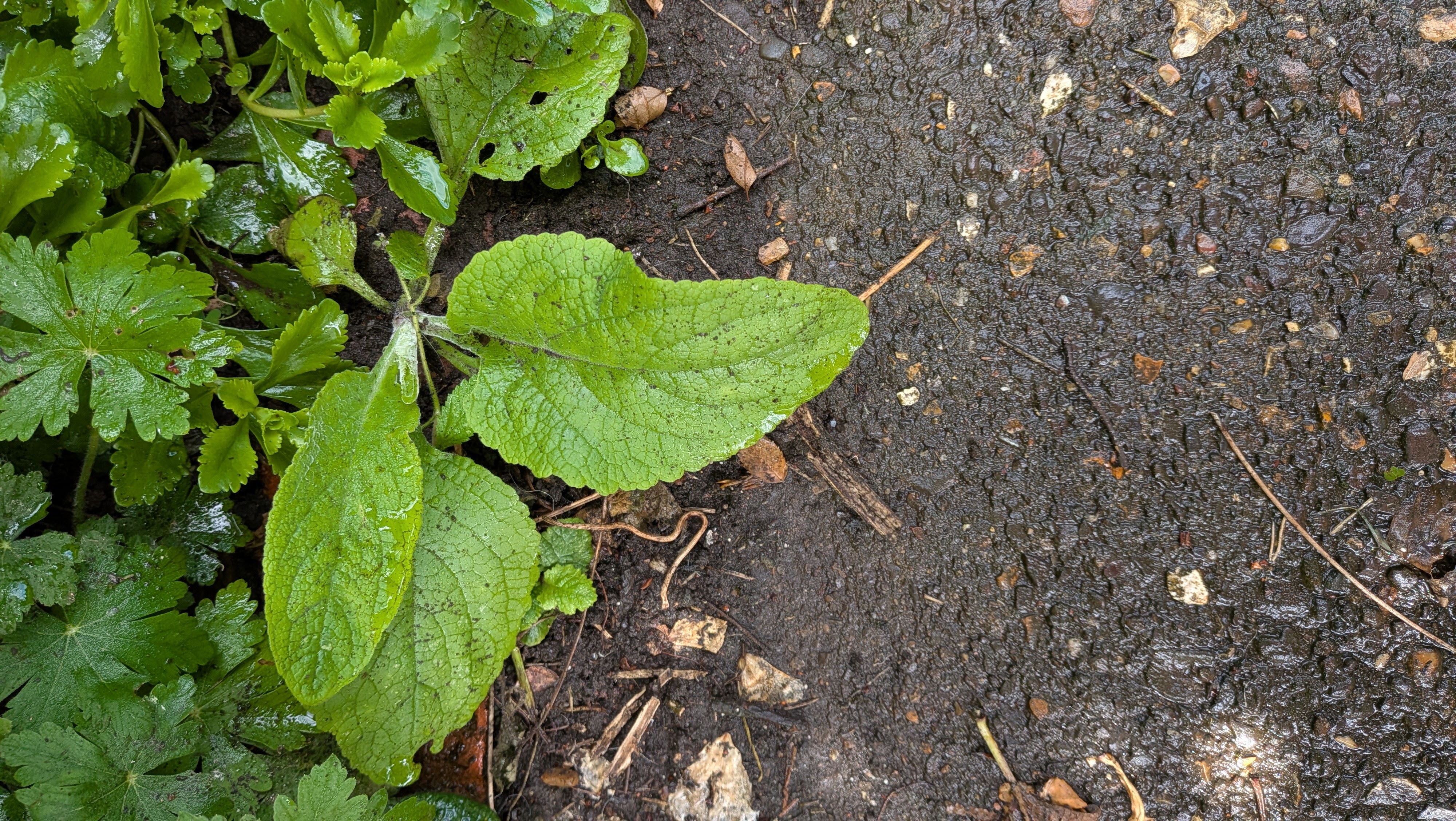
In their first year they look like this: just leaves, and you won’t get flowers off them.
Then in March the following year they start to throw out new leaves – you can yank off any manky ones at the base and they take quite brutal handling. Worth noting the whole plant is poisonous, but to be honest I’ve never had a rash or anything from handling them and certainly wouldn’t eat them.
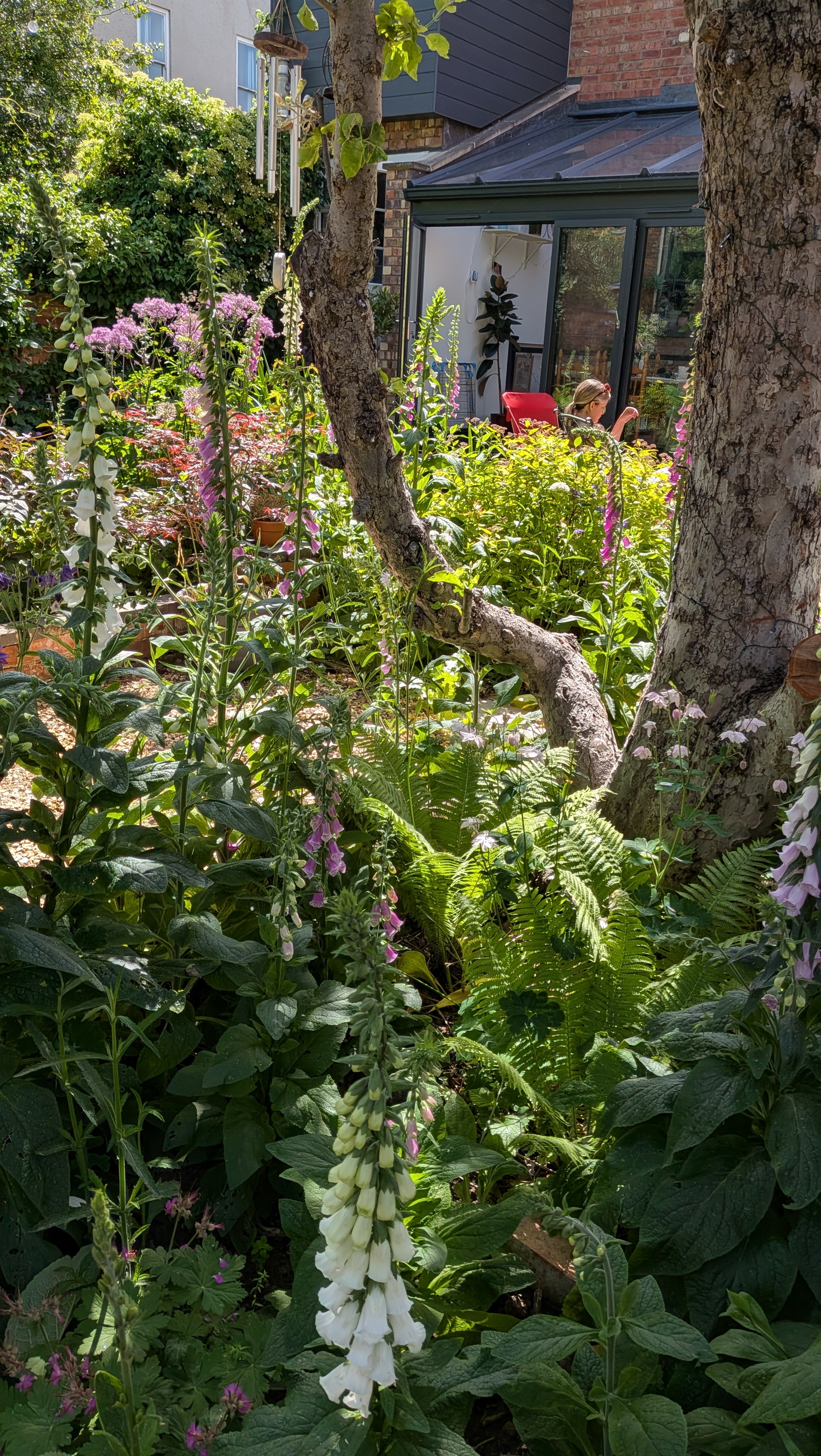
I deliberately filled the empty space behind the apple tree with foxgloves and ferns as it’s the shadiest area

The ones currently dominating my plot probably won’t flower again next year, but if I leave them to self seed it will be overwhelmed again in 2028, so I’m already planning to be a bit more careful with the seedpods.

The flower spikes produce loads of pods as the flowers drop, and if I let them brown they will just shed billions of seeds everywhere. I’ve already got some in pots that I know will flower next year and I’ll just be a bit more sparing with them.
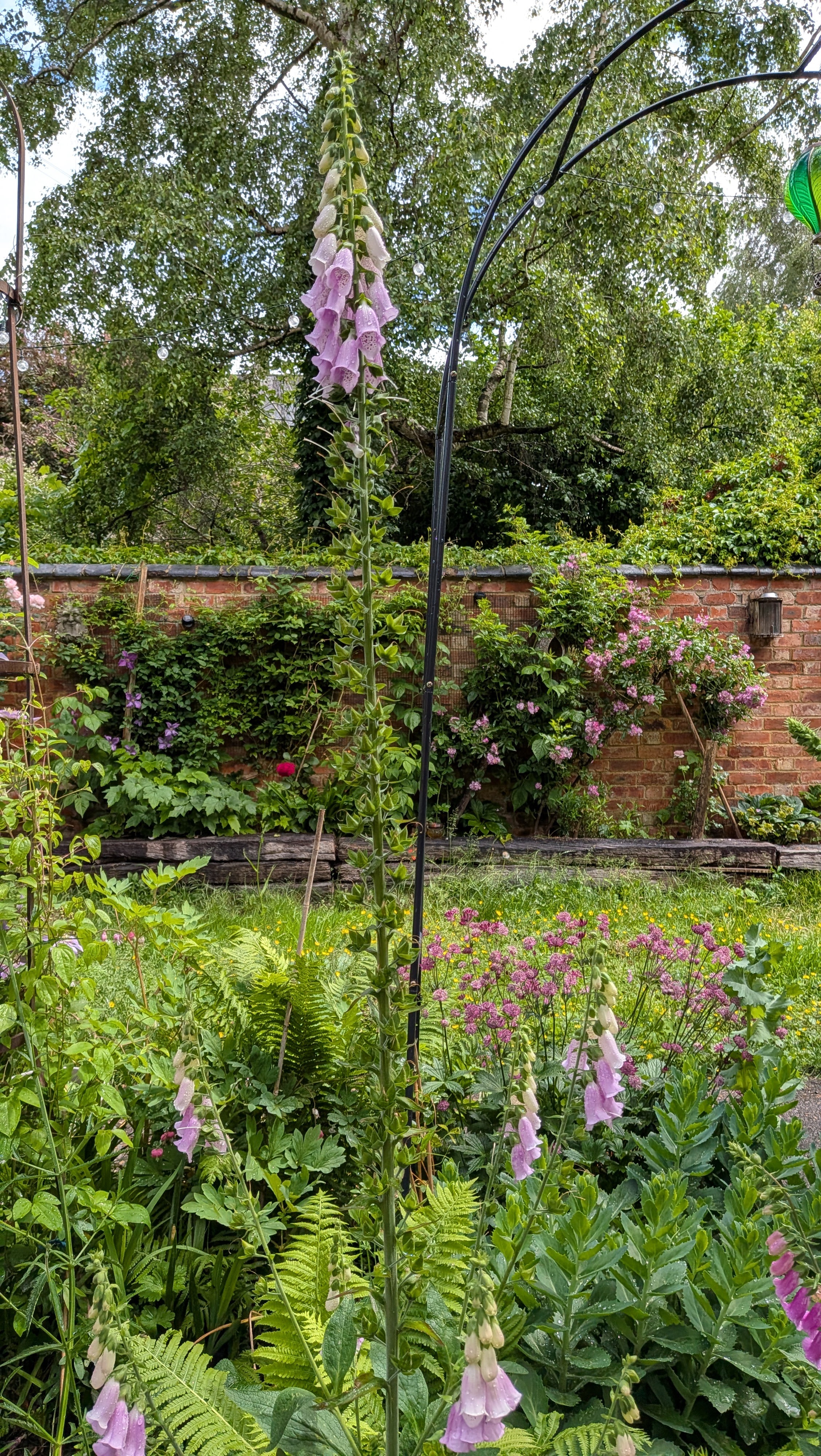
Cut here ⇨

So I’ll cut the spikes at the base of the bottom of the seed pods as soon as the top flowers are done – not right to the base, as I know I’ll get loads of side flower spikes first – they’ve already thrown a lot out this year presumably due to the heatwave in May.

I’m going to put all the spent stems into a bucket where they’ll brown off and the seeds will drop to the bottom. Yes, I’ll try and keep the white and purple ones separate but inevitably I’ll mess it up. Then I’ll sow again in seed trays or pots and try and keep a grip on how many I do. If you dig up a completely spent plant, you’ll probably find there are already little offshoots already growing at the base, and you can pot them up too.
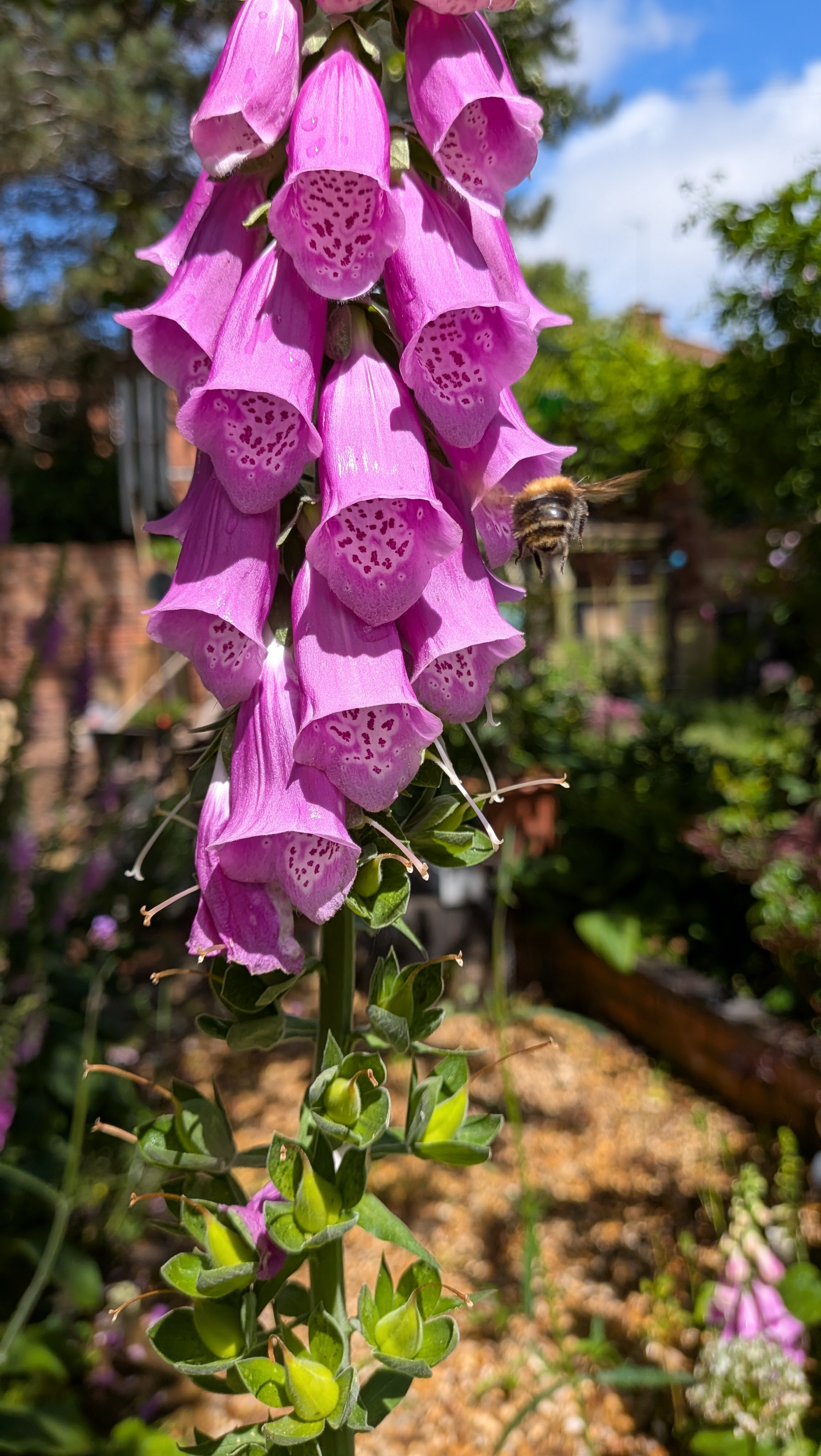
It’s not just me that loves them, the number of different bees we’ve had this year has been amazing – honey bees, fat bumblebees, bees with white bums, red bums, black bums, hoverflies, they zoom in headfirst and back out covered in pollen and move to the next flower.

My camera skills aren’t fast enough to catch them although my other half Steve Scoles at The Nenequirer has been making little slo-mo videos of them. (see below).

Each flower has a slightly hairy ‘doormat’ and the pollen is held at the top of the far end, so insects have to get right in and then back out. Then the pollen from one type gets spread to another when they visit multiple plants and you get seeds that may not look exactly like the parent plant. Magic.

There are lots of hybridised foxgloves you can buy, some with unusual shapes and amazing colours in the ‘doormat’ and they’re available in creams, peaches and yellows as well as some unusual chocolaty ones. The National Collection of digitalis is in Wiltshire and you can buy from their online shop.

So can you have too many foxgloves? Yeah, probably, but who cares! Enjoy them while they last…

1 Comment

Filed under Gardening

Baby April – 27 years on. What routes are there for tracing adoptive children – and what if they don’t want to be found?

Photo by Tembinkosi Sikupela on Unsplash

I’ve been a journalist for almost 30 years and, as detailed in these columns, sometimes as a local reporter you encounter very personal stories about families that resonate for decades.

As detailed in a previous post, I reported in April 1995 – 27 years ago – for the Bedfordshire Times and Citizen about an abandoned newborn baby who had been left at an address in Kempston. She was named April after the date she was found.

Years later I heard privately from the baby’s adopted mum, and also several people who think they may have been related to April, who now goes by another name. Up until recently, I just forwarded any messages to ‘April’s’ mum, who was kind enough, back in 2011, to let me know she was happy and healthy and it was going to be her choice whether she ever wanted to research her birth family.

I don’t know the full name of anyone connected with this case – and sadly the contact email I had for the adopted family is no longer working, so anyone who has contacted me recently to forward messages – I’m sorry, but I can’t at present as I don’t have current contact details.

I appreciate it’s incredibly frustrating for anyone involved in finding adopted relatives, but sometimes adopted children, as adults, just don’t want to have contact with their birth families.

I know friends who were adopted, or who didn’t ever know a birth mother or father, and still have no desire to do so. Not out of any malice, but just because they made a decision that their adoptive family was the only one that mattered. In some cases, they may not have any desire to find out their blood heritage until they have children of their own, and often not for sentimental but for entirely practical reasons, maybe to check for inherited medical conditions.

The introduction of ‘at home’ DNA kits, and the evolution of social media, has of course changed the way that people find ‘lost’ relatives. But even then, there may well be deeply significant reasons for people not to make those connections and we must respect the wishes of the person who may not want to be found. Not everyone wants to end up on ‘Long Lost Families’.

Ethically, its a minefield and there are different things to take on board depending when you were adopted. For example, if you were adopted before November 12 1975, you need to have a counselling session before being able to access your adoption files. Before the Children’s Act of 1975, there were no laws governing how long details of adoptions had to be kept, and many records were destroyed. There were also, right up until 1983, ‘private’ adoptions, which may have been between families where the birth parent may indeed have been a relative, but the social stigmas of the time may have led to secrecy. Again, paperwork in these cases are less likely to be available. Those adopted in Scotland or Northern Ireland may have different laws allowing different access to records, depending on when they were born.

In the late 1940s there was further legislation that allowed adoptive children to inherit, and further laws allowed the identity of adoptive parents to be concealed from birth parents, with children given a number on documents rather than a name.

By 1975 laws were established to professionalise the way local authorities kept records, at first for 75 years and later for 100 years. By the time the Children’s and Families Act 2014 came into force, far more consideration was given to siblings to be allowed to leave contact details rather than just the birth parent or adopted person (over the age of 18).

If you know of a family member who was adopted, and you wish to leave contact details in case they decide they wish to get in touch, there is a way.

The Government’s Adoptive Contact Register is NOT a tracing service, but for a fee (£15 if you were adopted, £30 if you think you are related to an adopted person) you can register online here https://www.gov.uk/adoption-records/the-adoption-contact-register

Note that adopted people can also register NOT to be contacted.

There are multiple online firms who claim to be able to help so be wary, especially if expected to hand over money. However there are legitimate agencies, usually involved in adoption and fostering via a local authority, so do your research.

According to the Government site, you can use an intermediary agency to help you trace a birth relative if you are over 18 and you were adopted, or you’re related to someone who has been adopted. The fee for the service depends on the agency.

You can use an intermediary agency if:

  • you were adopted before 30 December 2005
  • a relative of yours (including a relative by adoption) was adopted before 30 December 2005

When an intermediary agency finds a person, you can only contact them if they agree to it. If they don’t agree, the agency won’t tell you their name or whereabouts, but might be able to share some information, like their domestic or family circumstances or their general health and well-being.

If you are the adopted person and you don’t want to be contacted, you can request either an absolute veto or a qualified veto.

An absolute veto means an intermediary agency can’t approach you under any circumstances (your adoption agency can still pass on information to you, for example about a hereditary medical condition or details of an inheritance).

However a qualified veto means the adopted person can say how and when they are prepared to be contacted, for example by a sibling, but not a parent.

You can also contact the adoption team at your local council if you know where you were adopted or via a voluntary adoption agency or an adoption support agency. Some councils organise their adoption and fostering through a recognised chaitable trust, for example, for the West and North Northants councils, it’s the Northamptonshire Children’s Trust.

Remember too, there are adopted people who do not know much about their original birth name or adoption, and they can register with the General Register Office via www.gov.uk/adoption-records to help find their birth certificates.

There are hundreds of children still waiting to be adopted today, so if you are interested in finding out more about adopting and fostering, you can contact your local council too.

There were multiple other stories I covered about adoption cases, babies being left by traumatised mothers, and many family reunions, successful and otherwise, over the years I worked in local newspapers. There is no doubt that the rights of the child have changed enormously for the better, and I do hope that those involved in these often hugely emotional cases have the patience and understanding to respect the wishes of those involved.

2 Comments

Filed under Journalism, Parenting, Random

Daughter’s snowdrop makes it to 13 years in bloom

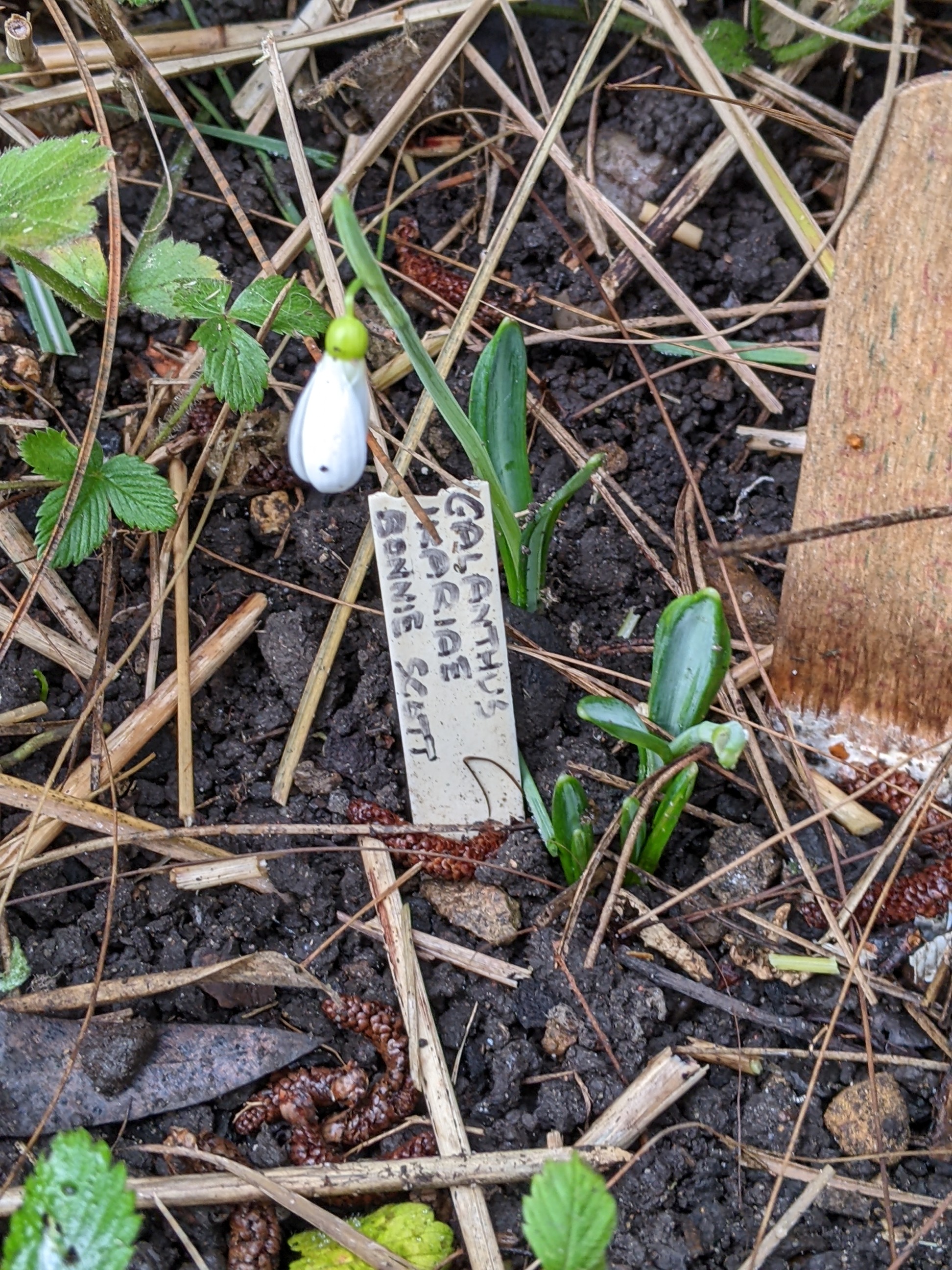
Each year I have a little jitter about whether our daughter’s snowdrop will appear.

Bred by the late galanthophile Jim Leatherland of Hollowell, Northants, galanthus ikariae ‘Bonnie Scott’ was given to me just after our fourth child and first daughter was born in February 2008. Bless Jim, he’d put up with my terrible plant knowledge and been a real mentor when I started gardening in Northants more than 20 years ago.

Working at the daily Chronicle and Echo at the time, I had somehow become the gardening correspondent, mostly (much like my parenting column) detailing my relief at keeping things alive.

Snowdrops should spread relatively easily, with new tiny bulbs forming beneath the soil each season. They should be lifted and gently split and replanted ‘in the green’ (while the leaves are still there after flowering).

But not my bonny snowdrop. There never seems much spread, hardly any new bulblets. I’ve tried moving it, always terrified the label will disappear and I’ll accidentally dig it up without realising. Then in late January it will pop up again, just with two or three flowers, but there, nonetheless, now almost 14 years on.

Maybe it needs a specific feed? Advice from experts always welcome.

Fingers crossed for next year…

Leave a comment

Filed under Gardening

Turn again Dick Whittington, this year’s Derngate panto is a welcome break from the real world

Leave a comment

Filed under Parenting

Lifting daffodils that have gone blind

I’m finally off work and quite looking forward to some lockdown gardening. While it’s been incredibly frustrating to see people isolating with massive gardens and apparently loads of free time, most of us have been working under difficult circumstances from home, yearning to get out in the little green space we may be lucky enough to have.

One of my jobs that’s not been done for years is to lift and divide my front yard daffs.

Daffodils can go blind, meaning they don’t flower, if they get too congested or are planted too shallow

Usually you should wait for daffodils to get to the yellow leaf stage before lifting and replanting, but if I don’t have that time. You should leave the leaves on, they need to reabsorb that green nutrition. Don’t be tempted to tie them either. If you have them in grass, leave then alone if they are flowering well.

The perennials in the tiny, dry front garden are trying to grow through a mass of leaves and I want to get some more plants in too, so the daffs have to move.

You can leave them to dry but it’s best to plant in the green and get them in the best state for next year. Plant at least to two bulbs’ depth to avoid digging them up accidently or giving squirrels a free lunch.

There’s perennials waiting to come up now the daffs have been thinned. Yes, that is a dead Christmas tree that I haven’t worked out how to dispose of yet.

I bought some coir blocks for a quid each from Poundland which has proved to be a real bargain for seedings and mulch. There are penstemon and rudbeckia in this tiny strip that should begin to shoot better now they aren’t being crowded out. The daffs are going in the back garden – just need to find some space…

These wallflowers were picked up almost dead from a DIY store last year, and are now adding colour in pots

Leave a comment

Filed under Gardening

Review – Pippi Longstocking at Royal and Derngate, Northampton

Pippi is a ray of much-needed sunshine at Christmas

Leave a comment

Filed under Parenting

I also write over here


If you think I’ve been a little quiet over recent months, it’s because I also write over here on our Northants-based magazine, The Nenequirer.

The title’s a bit of an in-joke for Northamptonians in case you were wondering:

the Nene (a river running through Northampton, pronounced Nen, rhymes with hen)

quirer (sounds liker choir-er).

Put together they sound like N‘enquirer.

Which is why it’s mostly now known as the NQ…

Leave a comment

Filed under Journalism

The Worst Witch is the best — The NeneQuirer review

Review – The Worst Witch, Royal Theatre Northampton (show seen, Sunday Dec 9)


THEY are pretty tough to impress, ten-year-old girls. They’ve just reached that eye-rolling, arm-folding kind of age. Gone are the days when they’d fall about at a fart noise or a silly face. Three of them – my daughter and her two […]

via The Worst Witch is the best — The NeneQuirer

Leave a comment

December 29, 2018 · 2:15 pm

Check out The Nenequirer review of Rules for Living

https://nenequirer.com/2017/09/14/rules-for-living-is-a-gamechanger/

Leave a comment

Filed under Parenting

Do you want to help find out what happens to coffee capsules?

Do you use coffee capsules? Do you wonder whether they decompose fully? The University of Northampton is looking for volunteers to take part in a project that will focus on examining the compostability of selected coffee capsules. It will run from July – November 2017. Participants will be provided with a free composting bin and the coffee capsules. They will be tasked with monitoring the process over the period of about three months, and providing researchers with the data. Support will be provided throughout the process by the research team, if required. Participants will be chosen on a first come, first served basis.

If you are interested, and are not UoN staff, please email Louise or Terry via louise.maxwell@northampton.ac.uk or terry.tudor@northampton.ac.uk.

Leave a comment

Filed under Random